 Introductions
How this author was taken hostage by his own creativity
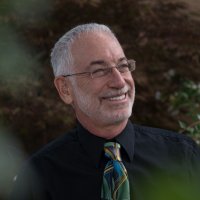
"I don't plan, plot, or outline my books," says award-winning author
Mark David Gerson. "Instead, I discover my stories as I write them."
Right now, Mark David is working on
The Lost Horse of Bryn Doon, the fifth novel of his Legend of Q'ntana fantasy series. "I wish I could tell you what it's about," he says. "I
really wish I could tell you what it's about!" But it sounds like he's just as in the dark as we are, so we'll have to wait to find out.
Mark David is also a photographer and host of a brand-new podcast called
Stories & Reflections.
Welcome, Mark David. First of all, what inspired your award-winning Q'ntana series?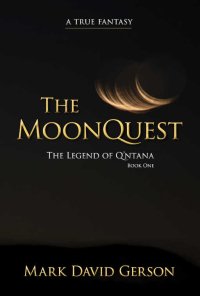
I like to joke that
The MoonQuest snuck up on me, beat me over the head, and took me hostage before I was even aware of what was going on! I say that because this was not a book I ever planned to write.
It was a sort of "creative ambush," and it happened during a writing workshop I was facilitating. Until that evening, I had never written during one of my workshops. This time, though, once my students were writing, an inner imperative (the spirit of
The MoonQuest?) insisted I do the same exercise. Within moments, I found myself writing about an odd-looking man in an even odder-looking coach pulled by two odd-colored horses.
The following morning, intrigued by the experience, I continued with the story, not knowing from one day to the next—sometimes from one sentence to the next—what it was about or where it was going. I simply followed where the story took me. And a year later, on the anniversary of that workshop, I completed the first draft of a novel I never planned to write, a novel that, about a third of the way through that first draft, titled itself
The MoonQuest.
In one of her memoirs, Madeleine L'Engle wrote this of
A Wrinkle in Time: "I cannot possibly tell you how I came to write it. It was simply a book I had to write. I had no choice."
That's how I feel about
The MoonQuest. It was a story I had to write, even as I had no idea what I was doing or what the story was about as I was doing it!
Why was The Moonquest a story that needed to be told?What if speaking or writing the words "Once upon a time" got you jailed ... or killed? That's the situation in Q'ntana, the land of
The MoonQuest, where stories are banned, storytellers are exiled or executed, and the moon, saddened by the silence, has cried tears that have extinguished her light.
From that description, you might assume
The MoonQuest to be a commentary on the current situation in the U.S.
Perhaps it is ... but it wasn't planned that way. How could it be when I began writing the book in 1994? Even then, I had no political agenda and no place or time period in mind. As well, I wrote all drafts but the final one in a different country: my native Canada.
Yet from the first edition, published in 2007, readers have consistently commented on how current and relevant they find the book to be. And not only American readers!
In each of my writing workshops and books on writing, I insist that my books are smarter than I am. That
The MoonQuest has turned out to be a story not only for our time, but for all time, proves that!
What's your best advice for new and aspiring writers?My advice to new and aspiring writers is to trust your inner voice and take the first step, even if it's a small one. Don't be discouraged by self-doubt or the fear of getting things wrong. Writing is a process of discovery, and the act of writing itself will lead you to unexpected places. Embrace the unknown, and don't be afraid to let go of control. Allow your creativity to flow naturally and remember that every piece of writing starts with a single word. So write that word ... and another and another. Just keep writing, and trust your imagination.
What do you enjoy doing when you're not writing?Roaming around the city or in nature with my camera.
Photography has been one of my passions since childhood. In fact, I was taking pictures with my Kodak Instamatic, and my Brownie before that, long before my Muse wore down my resistance to becoming a writer. (I never wanted to be a writer, or at least not consciously. But that's another story!)
From the first, even when I wasn't consciously aware of doing it, photography has allowed me to capture my experience of the world around me and, unlike writing, to do it in an instant. It's another way, complementary to writing, of interpreting that world and of sharing my vision of it with others.
Any other projects in the works?I've just launched a podcast,
Stories & Reflections, and I'm excited to be taking my storytelling to this new medium.
One of the themes of my Q'ntana books is that we're all storytellers. Even when we don't realize we're doing it, we are always expressing ourselves in story. It's one of the things that connects us, that makes us human.
Stories not only communicate our lives, they give meaning to our lives. It's as true of the stories we hear as it is of the stories we tell. And when those stories are shared from the heart, they're always universal, however personal they might be on the surface.
That's why I created
Stories & Reflections—to share some of the stories that matter to me and to encourage others to tell their stories.

Mark David Gerson is founder of The Mark David Gerson School of Writing and award-winning author of two dozen books. His non-fiction includes popular titles for writers, inspiring personal growth books, and compelling memoirs. As a novelist and screenwriter, he is best known for The Legend of Q'ntana fantasy series. His other fiction includes the novels of The Sara Stories, set largely in Montreal, his hometown.
When not writing, Mark David hosts the
Stories & Reflections podcast and coaches an international roster of writers and non-writers to help them get their stories onto the page and into the world with ease.
Share this with a friend!
Connect with Mark David:
Support Mark David's work: