 Introductions
"I felt that I could write a better story": how Michael J. Scharen found his groove
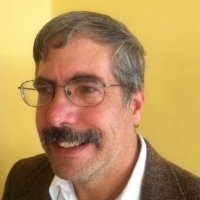
"I spent many evenings with an elderly friend watching movies," says science fiction author
Michael J. Scharen. "After seeing several turkeys, I felt that I could write a better story than many making it into production."
So he did. And to his amazement, he learned just how focused he could be. "I got into a groove," he says, "where I would write for days, weeks, or months at a time. The first year I wrote a total of five books."
Yet it's not enough, Michael knows, to be prolific and publish lots of books—you have to make sure readers know your books are out there.
"I'm not doing any writing at the moment," he says. "One thing folks do not realize is that marketing is as important as writing. That's where I spend my time."
On that note, here's Michael to talk a little about his life and work:
Welcome, Michael! Why was self-publishing the way forward for you?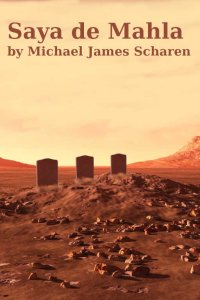
I believe getting drawn in by what folks feel the market expects makes for stale, cookie-cutter stories. They lose their individual flavor. The prime example of this is Hollywood making endless stories following comic book superheroes. Something fresh must be put out there by independent voices.
What are the most powerful themes in your stories?Beginning with my first novel,
Sol is Not Lost, through the latest book,
Saya de Mahla, is one running theme. Namely, that is the promotion of individuals and motivated teams over arbitrary violent hierarchies, a.k.a. governments and their cronies. The protagonists are talented free-thinkers. The antagonists might be alien creatures but—more often than not—they are jealous bureaucrats, politicians, and others. These would rather stifle, destroy, or usurp what the builders have done.
Getting drawn in by what the market expects makes for stale, cookie-cutter stories.
What's Saya de Mahla about?Saya de Mahla is the story of Ariel Malka, an entrepreneur receiving a transplant in a renowned hospital there. Saya de Mahla is built on a sunken reef in the Indian Ocean. There is no government, nor do they want one. He moves space operations to join them. After mysterious deaths of friends on Mars, he investigates. Though he and his team work with governments against a city-killing meteor, they are unappreciated. They continue undermining those wishing to remain free.
As mentioned above, a prevailing theme throughout my work is anti-collectivism. This appears throughout, the characters are engaging and fun, and some dry humor is added. The books are not preachy like Ayn Rand (though I like her), but they seek to entertain other paradigms, as science fiction often does. As the genre strives to do, I research cutting-edge technologies and extrapolate in the most realistic way. The main characters are not there to save the world single-handedly, but to lead by example and gather talented teams to work through problems.
Can you tell us about your writing process?I have not written much lately as marketing efforts take all of my time. When I do sit down to write, there isn't much ritual. If my premise feels solid, I will write every day. My chapters are roughly equal in length, taking five pages in the word processor. If that thread is not complete, I will begin a new chapter. Only once did I interrupt this pattern, and it was difficult to get back into the story, though I eventually was very happy with the result (
Tasha Nagorski: Martian Pioneer).
What other books has your work been compared to?One reviewer compared my first work,
Sol is Not Lost, to Robert Heinlein's
The Moon Is a Harsh Mistress or
The Roads Must Roll. They have the same libertarian/anarchist theme which appear throughout my work. If I could maintain such comparisons, I will be flattered.

Michael J. Scharen has earned B.S. and M.A. degrees, both in physics. For several years, he worked research and development in high-temperature ceramic superconductors and devices, then later in production of text pagers. He has several technical papers and patents to his name, including two with Nobel Prize winner J. Robert Schrieffer. Writing is a recent endeavor. Long a fan of hard sci-fi, Michael crafts novels with relatable characters, extrapolating today's engineering achievements into tomorrow's possibilities. Eight titles have been published to date. Michael lives in Northern California, taking care of one cat and one miniature horse.
Share this with a friend!
Connect with Michael:
Get in touch with Michael:
Support Michael's work: