 Introductions
Empowered by self-publishing? Yes, says this thriller author

"I love so many different things it's slightly alarming," says thriller author
Magdalena Adic Turcin, "but that mix of curiosity, structure, chaos, and creativity is exactly where my best ideas come from."
Born and raised in Croatia, Magdalena draws inspiration from the natural beauty of her homeland. "I still think it's unfair how one country can fit forests, mountains, a clean sea, and islands tucked right beneath mountain peaks," she says.
It must be the perfect setting for writing, because Magdalena has received plenty of praise for her psychological thriller novel
The Eye Collector, the first in the series of the same name. Currently, she's working on the second installment,
The Mirror Collector. Stay tuned!
I interviewed Magdalena and asked her about life challenges, favorite authors, and what she loves about self-publishing.
Welcome, Magdalena! Why are you drawn to the world of indie/self-publishing?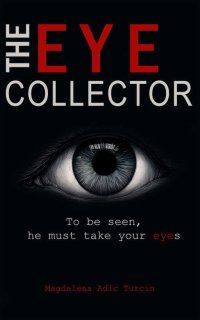
I have a lot of respect for traditional publishing and the people behind it, but I slowly realized that indie and self-publishing fit me almost perfectly. I genuinely enjoy being involved in every step of the process, from writing and editing to design decisions and figuring out how the book finds its readers. I like knowing how things work and being hands-on, even when it means learning the hard way.
Self-publishing became a really important personal accomplishment for me. It showed me that I can take an idea all the way to a finished book without handing it off at the first opportunity. It's challenging, sometimes chaotic, and occasionally overwhelming, but it's also incredibly satisfying. There's something empowering about holding a book and knowing you were part of every decision that brought it into the world.
What was one of the biggest challenges in your life?For a long time, my biggest challenge was finding my place in the world. I grew up in Croatia during and after the civil war, and those early years came with instability, loss, and a sense that life could change overnight. Later, I lost my father, survived a serious car accident at eighteen that left lasting physical and emotional scars, and went through relationships that tested my sense of self. Life asked a lot, very early.
Despite that, I finished university and slowly began building my life. The hardest work wasn't external, but internal: learning how to live with anxiety and depression, and understanding that difficult experiences don't disappear, but they can be transformed. Over time, I learned how everything that happens to us shapes us, often in ways we only understand later.
I can honestly say I'm a happy person today. Writing dark psychological stories is part of that healing. It allows me to explore the inner worlds we all carry and to turn pain into insight, fear into curiosity, and survival into meaning. What once felt like obstacles became the foundation for empathy, creativity, and a deep appreciation for life.
We are watched, measured, and evaluated more than any generation before us, yet genuine understanding and empathy are often missing.
Who's had the biggest influence on your writing?Life itself has probably been my biggest influence, along with the people who shaped me early on. My father was especially important. When he was alive, we spent a lot of time telling stories, reading together, and escaping into fantasy worlds. Those moments taught me that stories are not just entertainment, but a way to connect, imagine, and make sense of life.
In literature, I've always been drawn to writers who invite you to think deeper and feel more. Fyodor Dostoevsky and Franz Kafka showed me how complex the human mind can be, while Gabriel García Márquez taught me that reality and imagination can exist side by side. Stephen King helped me understand fear as something deeply human, and authors like Émile Zola and Philip K. Dick expanded how I think about realism and perception. I've also always loved the poetry of Federico García Lorca for its emotion and symbolism.
Alongside fiction, Carl Jung's work has had a strong influence on me, especially his ideas about the unconscious, archetypes, and the shadow. All of these influences share something essential: they open entire worlds through words and help us grow empathy, curiosity, and understanding.
Why was The Eye Collector a story that needed to be told?This story needed to be told now because we live in an era of constant exposure and increasing emotional isolation. We are watched, measured, and evaluated more than any generation before us, yet genuine understanding and empathy are often missing. That contradiction creates pressure, and pressure always looks for a way out.
The Eye Collector reflects a world where identity is shaped by visibility, control, and comparison, and where people are expected to endure silently. Every character in the story carries the weight of modern life and confronts it with the limited tools they have, sometimes in destructive ways. The novel asks difficult questions about responsibility, empathy, and what happens when society notices pain only after it becomes impossible to ignore.
At the same time, the story isn't without hope. By looking directly at psychological darkness, it invites awareness rather than fear. Understanding, attention, and empathy are presented not as weaknesses, but as the only real way forward.
What themes does The Eye Collector explore?The Eye Collector is a psychological thriller series that explores what happens when being unseen becomes unbearable. Set in a world that feels uncomfortably close to our own, the story follows the collision of trauma, perception, and obsession, asking how far someone might go to reclaim control in a society that constantly watches yet rarely truly sees.
The series blends psychological tension with philosophical questions about identity, power, and empathy, focusing on characters who each carry the weight of the modern world and fight it with the only weapons they have. It's dark, unsettling, and deeply human rather than sensational.
The universe of
The Eye Collector is continuing to expand, with the series currently being developed for the screen alongside the books. At its core, it's a story about visibility, survival, and the dangerous moment when a person decides they will no longer remain invisible.

Magdalena Adic Turcin is a Croatian author, illustrator, and educator from Varaždin. She works as a vocational high-school teacher in wood technology and design, with a background in science, art, and education. Her writing has received international reader recognition, particularly for her psychological thriller
The Eye Collector. Magdalena is also the author of children's and illustrated books and is an active member of creative and educational communities. When not writing or teaching, Magdalena explores digital art, psychology, and the intersection of science and storytelling, drawing inspiration from everyday life and the human mind.
Share this with a friend!
Connect with Magdalena:
Get in touch with Magdalena:
Support Magdalena's work: